ZDR
Defensive Investment Strategy: What It Is and Why We Back It
A defensive investment strategy puts long-term stability and capital protection ahead of chasing the highest possible returns. The same principles underpin our funds: we invest in commercial properties on long-term leases, where returns come mainly from rent paid by financially strong tenants.
What is a defensive (or conservative) investment strategy?
A defensive strategy prioritises:
- capital preservation
- stable, predictable income
- low volatility
- a long-term investment horizon
Whereas growth-oriented strategies depend on rising asset values or market timing, a defensive strategy is built on assets that produce regular income, such as rent, dividends or interest.
At the riskier end of the spectrum, Value-Add and Opportunistic strategies aim for higher returns by taking on development risk or acquiring underperforming assets. Conservative funds take the opposite approach. Rather than chasing quick gains, they acquire completed, fully let buildings in prime locations. This keeps the risk of income disruption to a minimum, making the approach particularly well suited to investors looking to protect their capital against inflation.
How we apply a defensive strategy in our real estate funds
The stability of our funds rests on four key pillars:
1) Long-term leases
Leases in the retail park segment typically run for 5 to 10 years, and often longer. This gives us clear visibility of the fund's cash flow for years ahead.
2) Financially strong tenants
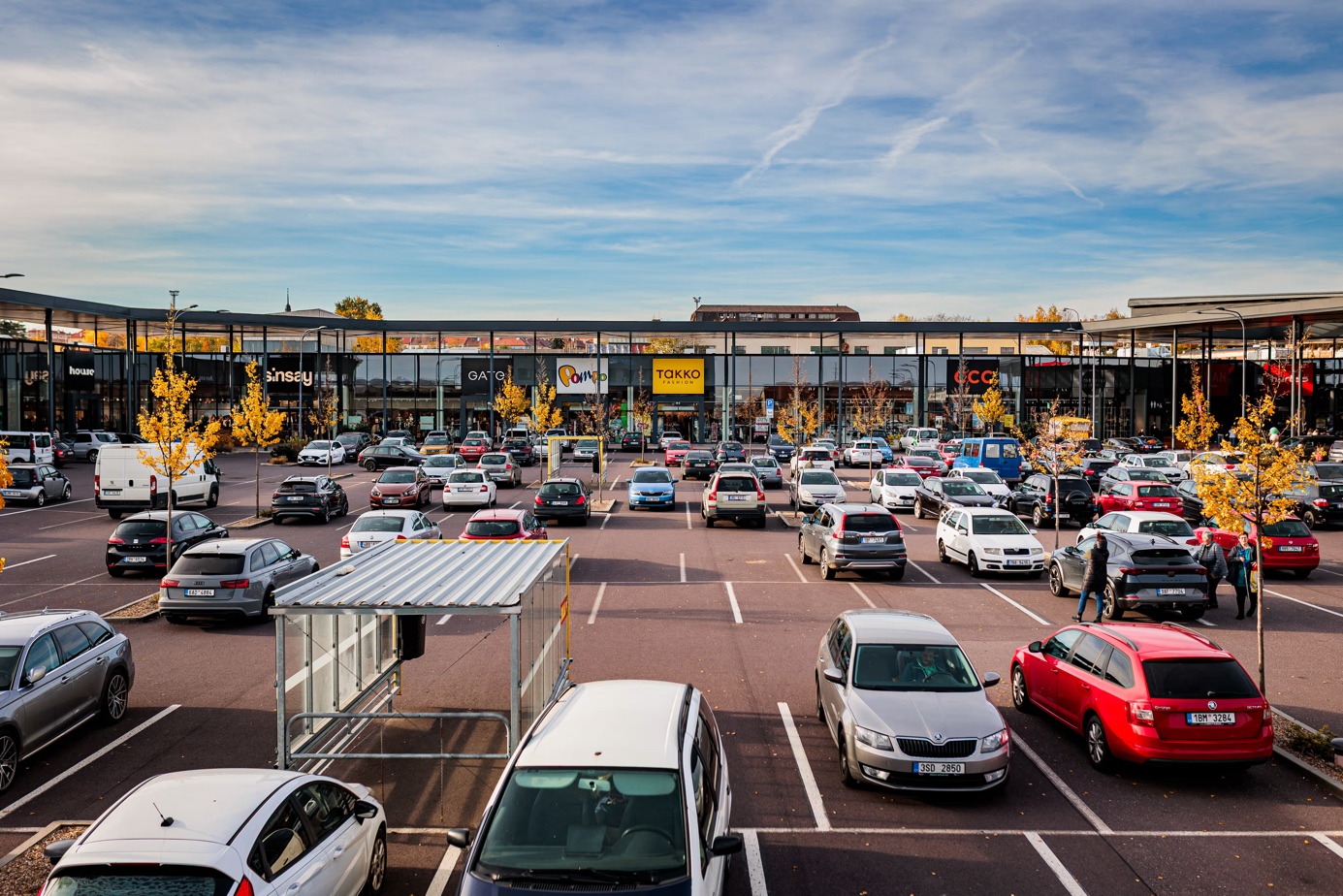
Our portfolio is made up of retail parks anchored by grocery, drugstore and everyday service tenants. Most are large multinational chains whose sales hold up at every stage of the economic cycle.
3) Broad diversification
Our funds hold dozens of retail parks across multiple regions and European countries, with a large and varied tenant base. This limits the impact that any single tenant can have on overall income.
4) Income driven by rent
Returns are generated mainly from rent collected, which makes them highly predictable over the long term.
Why we chose a defensive strategy
Our defensive approach is more than a general investment philosophy. It reflects the nature of the segment we have specialised in for years: regional retail parks focused on everyday goods and services.
These properties are among the most resilient in European commercial real estate. Grocery stores, drugstores and essential service providers maintain steady sales even when the economy slows, which supports high occupancy and reliable rental income. Retail parks also benefit from a simpler operating model, lower running costs and easy access for everyday shoppers.
A strategy proven across economic cycles
One of the key strengths of a defensive real estate model is how well it holds up through every phase of the economy:
- Economic growth: stable rents plus rising property values
- Inflation: leases often include indexation clauses that link rent to inflation
- Slowdown or recession: demand for everyday goods remains stable
- Market volatility: income does not depend on asset prices
Because demand for essential goods and services stays relatively steady, strong tenants on long leases continue to generate reliable income even when the economy is volatile.
Lease length: the foundation of stable returns
One of the most important indicators of a real estate fund's stability is its weighted average lease expiry (WALE). The longer the WALE, the more predictable future income becomes.
On this measure, the ZDR Investments Group performs well above the market average. As at H1 2026, ZDR Master Fund reported a WALE of 7.4 years and an occupancy rate of 99.8%. As a result, our defensive strategy allows investors to benefit from commercial real estate returns with relatively low volatility and a high degree of long-term predictability.
Who is a defensive strategy suitable for?
A defensive strategy is best suited to investors who:
- value stability over maximum returns
- want to preserve their capital over the long term
- are looking for regular income
- have a lower appetite for risk
It typically appeals to investors building a long-term portfolio, those in the later stages of their investment horizon, and those looking to balance out higher-growth holdings.
A natural fit for our segment
For us, a defensive strategy is not a constraint on returns, but a way of making the most of the segment we operate in. Stable rental income translates into a stable portfolio value and steady returns for investors, as our regular property revaluations consistently confirm.
A conservative approach is the natural foundation of our investment model. It is built on genuine demand for everyday goods and services, long-term relationships with tenants and stable property operations throughout the economic cycle. Stability remains the core principle behind every fund we manage.
This article does not constitute an offer, solicitation or recommendation to invest. Investing involves risk and may result in a fall in the value of your investment and a loss of capital. The value of investment shares may go down as well as up, and past performance is neither an indicator nor a guarantee of future results. Investments in the funds are subject to the risks set out in the fund statutes.
Label
Let your capital work for you in real estate across Europe
1
Leave us contact
2
We’ll get in touch and guide you through the steps
3
Start earning with your investment
We will contact you as soon as possible and together we will choose the best way to invest.
